
Research by Jane Kwamboka Nyamongo, article by Luke Lekishon
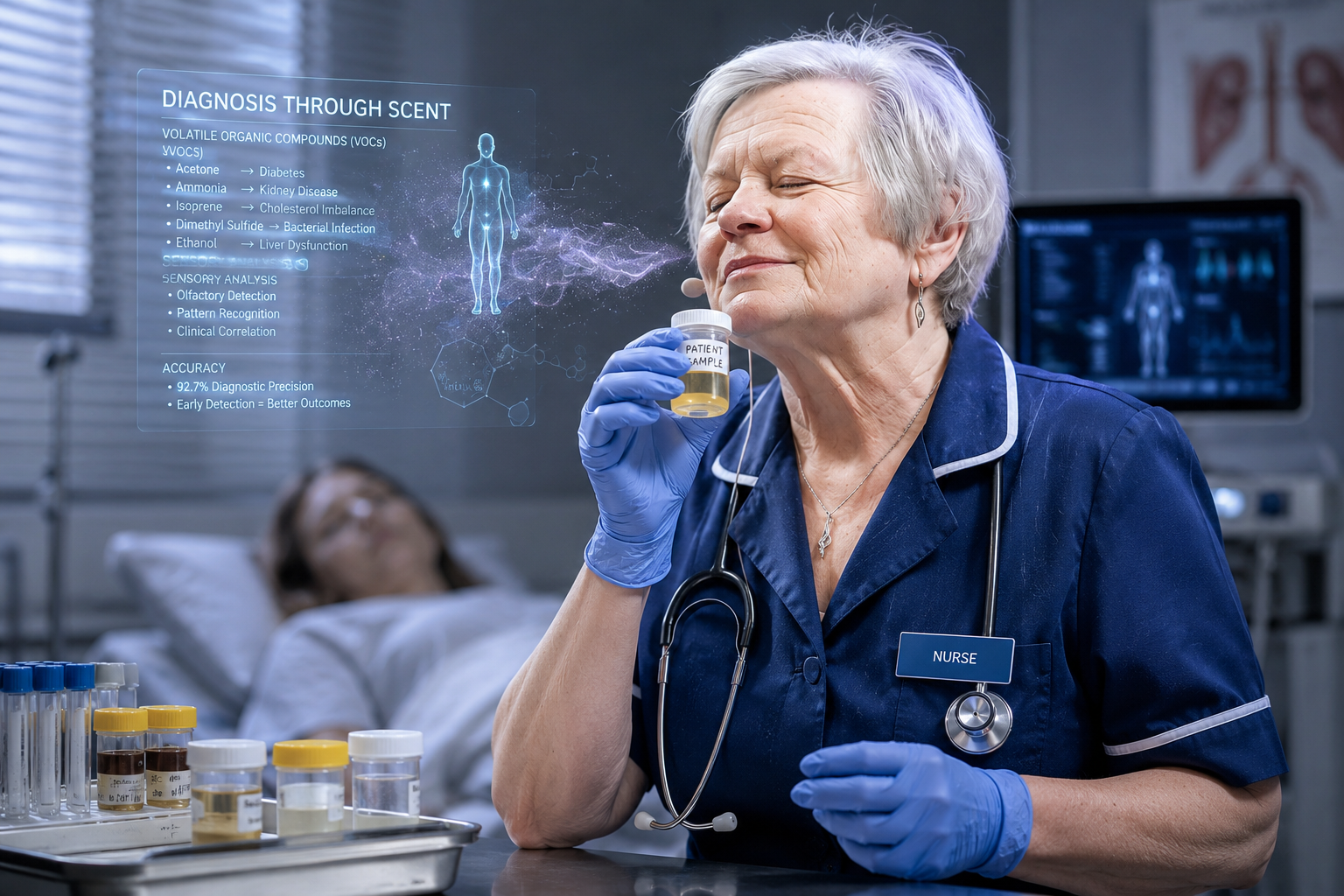
What does Parkinson’s smell like? “It has a heavy, thick musk smell, very different,” says nurse Joy Milne, aged 75, from Scotland. Born with hereditary hyperosmia, a rare heightened sensitivity to odors, she spent a lifetime learning to recognize diseases through their scents. After working as a nurse in a Nightingale ward, she acquired a medical olfactory library: she could tell diseases apart by smelling the patients suffering from them. She called it, her ‘nursing bag of smells.’
She smelled Parkinson’s on her husband years before his diagnosis. When they met in school at age 16, Joy says Les, her husband, had a wonderful masculine musk scent. He did not wear perfume or deodorant because he knew Joy’s nose was sensitive, however, when he turned 31, she noticed that his smell began to change, and this worried her. At first, she thought he was not bathing properly or brushing his teeth; when she confronted him about this, it caused a conflict, and she realized that she should not nag him too much. When Les turned 33, the unusual smell had become his dominant scent. Unknown to them at the time, Joy’s nose had diagnosed Les with Parkinson’s disease.
It took doctors 12 years to officially diagnose him with Parkinson’s disease, but by then, a lot of neural damage had already been done. What if Les had been diagnosed sooner? Could the damage have been prevented? When Joy attended a conference for people with Parkinson’s disease, she smelled the same heavy scent on other patients as she interacted with them. By the end of that conference, she felt that she could distinguish between people with Parkinson’s disease, and those without the condition by just using her sense of smell.
She shared her story with experts, and her nose was put to the test. Researchers separated her from the patients because she could identify the visible symptoms of Parkinson’s. They then asked her to smell cloth samples cut from clothes worn by people with Parkinson’s disease, as well as samples from people without Parkinson’s. The results were staggering. Out of 24 samples presented, Joy correctly identified all the people with Parkinson’s disease. She even identified one person who had not yet developed Parkinson’s disease but who, six months later, was officially diagnosed with the condition. This discovery launched “Nose to Diagnose,” a technology that imitates Joy’s sense of smell and diagnoses Parkinson’s disease with 97% accuracy. Unfortunately, Les died after the first round of tests, and it became Joy’s dream to see this technology introduced in hospitals around the world.
Typically, Parkinson’s disease is diagnosed clinically based on medical history, current symptoms, and a physical examination. Using this approach, Parkinson’s disease is often diagnosed after about 50% of neural damage has already occurred. But what do we know about Parkinson’s disease? Parkinson’s disease is a progressive neurological disorder that affects movement. It occurs when certain nerve cells (neurons) in the brain, especially in a region called the substantia nigra, gradually break down or die. These neurons normally produce dopamine, a chemical that helps control smooth and coordinated muscle movements. When dopamine levels drop, movement becomes slow, stiff, and uncoordinated.
The exact cause of Parkinson’s disease is not fully known, but several factors contribute to its development. The primary cause is the degeneration of brain cells that produce dopamine. This leads to impaired communication between the brain and the muscles of the body. Some cases are inherited due to gene mutations, which are more common in families with a history of the condition. Environmental factors may also contribute to the development of Parkinson’s disease. Exposure to toxins such as pesticides or heavy metals may increase the risk. Additionally, aging increases the vulnerability of brain cells, and most cases occur in people over the age of 60. Finally, the presence of Lewy bodies is a known risk factor. Lewy bodies are abnormal microscopic clumps of the protein alpha-synuclein that accumulate inside brain neurons, causing them to malfunction and eventually die.
The signs and symptoms of Parkinson’s disease include tremors (shaking of the hands, legs, or jaw), slurred or unclear speech pattern, slowed movement (bradykinesia), muscle stiffness (rigidity), poor balance and posture, a shuffling walk, and reduced facial expressions. Although Parkinson’s disease has no cure, several interventions can help manage its symptoms. At the Kenya Institute of Special Education (KISE), support is provided for patients with Parkinson’s disease in several ways. First, prior to diagnosis, experts can detect the condition and work with doctors to ensure an accurate diagnosis. Second, physiotherapy services help improve mobility, balance, and muscle strength. Third, for medication and surgical interventions that may help patients cope with the condition, KISE refers clients to Kenyatta National Hospital and other relevant hospitals within the country.
Other useful interventions include occupational therapy, which helps individuals maintain independence in daily activities such as dressing, eating, and brushing their teeth, and speech therapy, which assists with speech and swallowing difficulties. These services are also offered at KISE. In addition to these professional services, certain lifestyle modifications can help individuals cope with the condition, including regular exercise, maintaining a balanced diet, and receiving emotional and psychological support from family and friends.
Despite the challenges posed by Parkinson’s disease, life can still go on. Proper management can greatly improve the quality of life. For patients and caregivers, establishing a proactive multidisciplinary care team, including neurologists, physical therapists, and Parkinson’s specialists,is essential for navigating the long-term challenges of the disease and ensuring that one remains a functional member of society.
Related Posts
EVERYTHING YOU NEED TO KNOW ABOUT EPILEPSY: SYMPTOMS, RISKS, AND CARE
Research by Dr. Lynett Ong’era article by Luke Lekishon edited by Nadia Muthoni Epilepsy is…
BEFORE YOU ASSUME: HERE ARE 5 THINGS SOCIETY GETS WRONG ABOUT DISABILITY
Article by Nadia Muthoni He had learned to read the room before the room could…
A Legacy of Impact: KISE Mourns the Passing of KISE Council Chairman Habat Sheikh Abdi.
By Josephine Nkuubi The Kenya Institute of Special Education is mourning the sudden demise of…
SMALL STEPS, BIG VICTORIES: INSIDE A MOTHER’S JOURNEY OF HOPE, HEALING, AND MILESTONES
By Nadia Muthoni It was a simple gesture, yet deeply profound, a parent walking into…