Story done by Luke Lekishon revised and edited by Nadia Muthoni

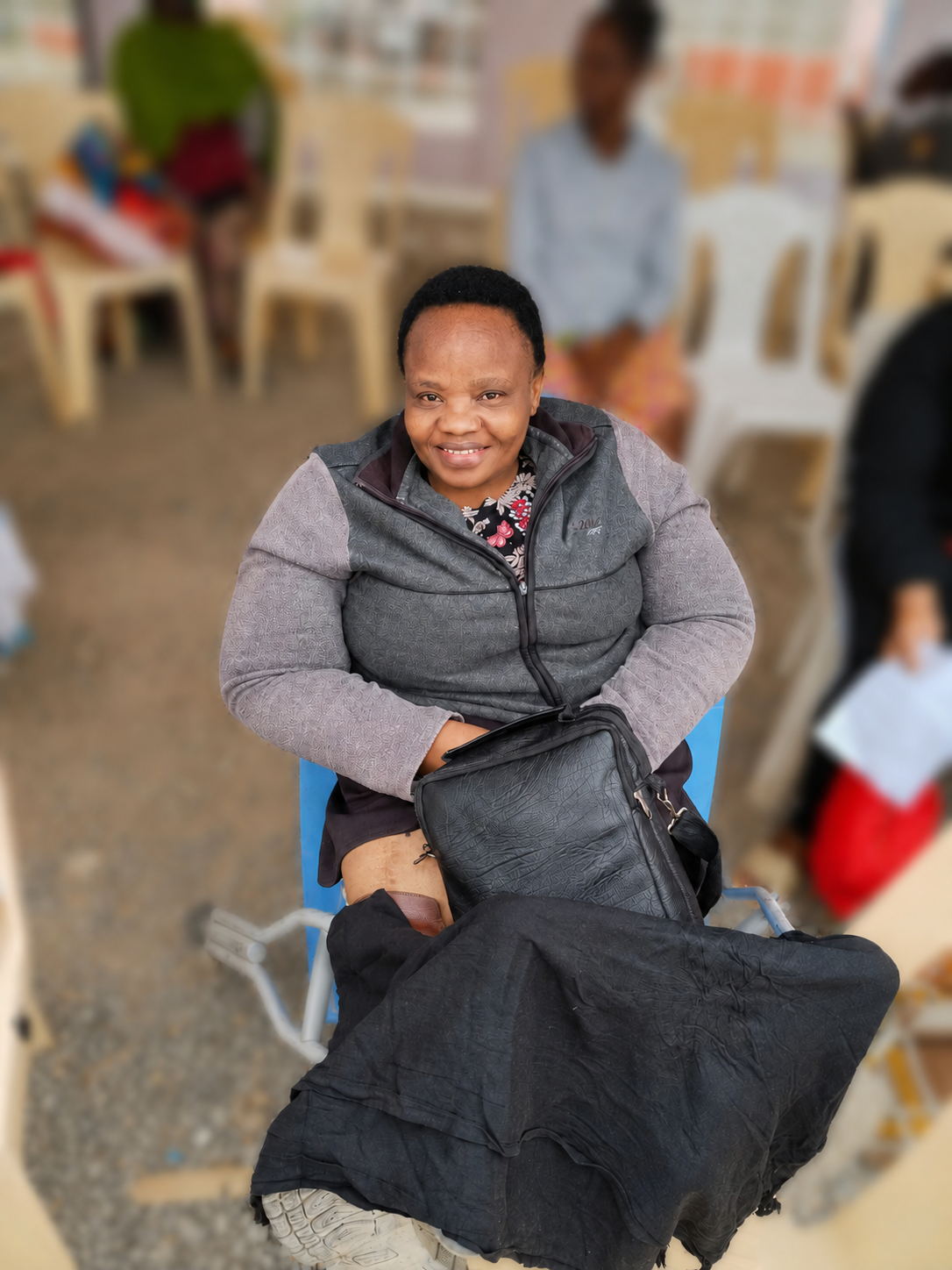
Some lives quietly challenge the world's assumptions. They do not demand attention through loud declarations but through resilience, grace, and an unwavering belief that every human life has value. Josephine Mwangangi's story is one of those lives. Now in her fifties, Josephine has lived with a physical motor disability since birth. Yet she has never allowed her condition to define her identity. Instead, she has spent a lifetime proving that disability is not the absence of ability, but simply one part of the human experience. When she speaks about her childhood, her face softens with gratitude. "My parents accepted me and loved me for who I am," she says. "That support gave me the confidence to face life."

For Josephine, those words carry the weight of a lifetime. She understands that many children with disabilities grow up fighting battles that begin at home, rejection, isolation, and low expectations. Her story was different. Her parents chose acceptance over shame, encouragement over fear, and love over limitation. In doing so, they gave their daughter something far greater than material comfort: they gave her confidence. That confidence became the foundation upon which she built her life.

Her education began at a special school in Machakos, where she discovered that disability did not diminish her capacity to learn. The classrooms, lessons, and textbooks were no different from those used by learners in other schools. The difference lay not in the curriculum but in the environment, one that recognized every learner's potential and nurtured it with patience and understanding. Perhaps even more important than academic lessons were the words of encouragement that echoed through the school corridors. Teachers and counsellors constantly reminded the learners that their lives had purpose, that hope was stronger than hardship, and that their future was worth believing in. Those messages stayed with Josephine long after she left school.

Today, she works at Mavoko Water Company in Machakos County, where she serves diligently while continuing to advocate for the dignity and inclusion of persons with disabilities. Her work is more than employment; it is living proof that given opportunity and support, persons with disabilities contribute meaningfully to society. Years of lived experience have shaped Josephine's understanding of disability. She speaks not with bitterness but with remarkable clarity.

"Disability is part of life and will never end as long as people exist," she explains. "People are born with disabilities. Others acquire them through accidents, illnesses, or even war. That is why society must learn to accept and support persons with disabilities." To Josephine, disability is neither a tragedy nor an exception. It is part of the human condition,a reality that touches families, communities, and nations. The true challenge, she believes, is not disability itself but society's response to it. Acceptance, she says, is where inclusion begins. Every person with a disability deserves equal opportunities, respect, and the chance to participate fully in society. Inclusion is not an act of charity; it is a recognition of human dignity.

Her advocacy also extends to policy. Josephine believes Kenya has made important strides in protecting the rights of persons with disabilities, but she urges the government to fully implement the Persons with Disabilities Act. Stronger enforcement, she says, would help remove many of the barriers that continue to prevent persons with disabilities from enjoying equal access to education, employment, healthcare, and public services.

Despite her optimism, Josephine's daily life is not without challenges. Something as ordinary as using a public toilet can become an exhausting struggle when facilities are not designed with accessibility in mind. Accessing specialized healthcare and professional support often requires traveling long distances, a journey made even more difficult by mobility limitations and inaccessible transport systems.

These experiences have convinced her that disability services should not remain concentrated in major towns and cities. Instead, they should be brought closer to communities, ensuring that those who need them most can receive support without facing unnecessary hardship. Yet even in speaking about these obstacles, Josephine refuses to surrender to despair. Hope, she believes, is one of life's greatest gifts. "Always have hope because life belongs to God," she says. "We never know what tomorrow may bring. Today may be tough, but tomorrow could be better." It is a philosophy she has lived rather than merely spoken.

Josephine Mwangangi's journey is not simply the story of a woman living with a disability. It is the story of what becomes possible when love replaces rejection, when opportunity replaces exclusion, and when hope refuses to yield to circumstance. Her life reminds us that disability does not diminish a person's worth, dreams, or ability to contribute. Rather, it challenges society to become more compassionate, more accessible, and more inclusive.

In the end, Josephine's greatest lesson is beautifully simple: every person longs for the same things, to be accepted, to be valued, and to live with dignity. When society embraces that truth, inclusion ceases to be an aspiration and becomes a way of life. I hope her story inspires you.

Post a comment

Your email address will not be published.

Related Posts